Curious why so many Menifee neighborhoods feel thoughtfully designed from the ground up? If you’ve toured communities with lakes, parks, trails, and a clubhouse in one place, you’ve likely seen a master-planned community. It can be a great fit for your lifestyle, but it helps to know how these neighborhoods work before you buy. In this guide, you’ll learn what a master-planned community is, why they’re common in Menifee, how HOAs and amenities impact daily life and resale, and what to review so you can move forward with confidence. Let’s dive in.
What a master-planned community is
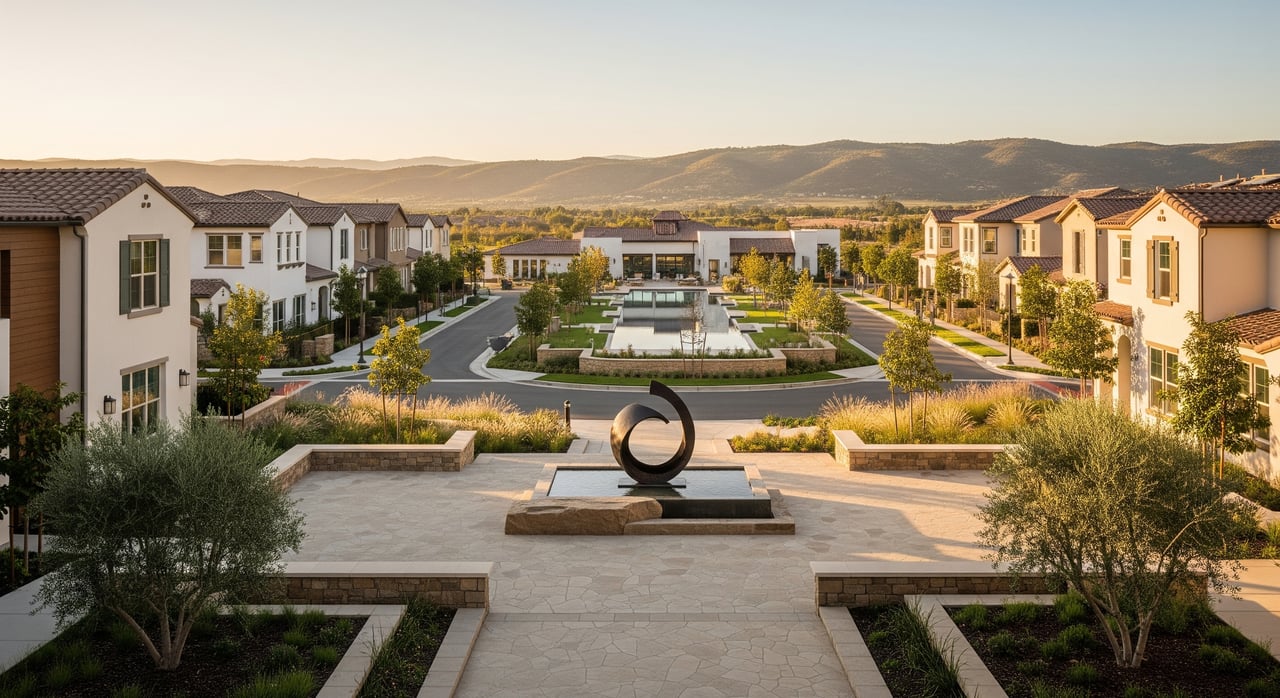
A master-planned community is a large, developer-led neighborhood built under a single, long-term plan. Instead of one small subdivision, it brings together multiple phases of housing, on-site amenities, and coordinated landscaping and infrastructure.
Key components
- Mixed housing options, from entry-level to move-up homes. Some plans include townhomes or separate 55-plus sections.
- Community amenities such as parks, walking trails, community centers, pools, sports courts, and playgrounds. Some plans include small commercial areas, schools, or medical offices.
- Coordinated streets, landscaping, and sometimes water features or man-made lakes.
- Multi-year phasing that can influence home styles and pricing over time.
- One or more HOAs that maintain common areas and enforce community standards. A master association may sit above smaller sub-associations.
- Developer control during build-out, with HOA governance transferring to resident-elected boards once the community reaches turnover milestones.
How MPCs differ from subdivisions
Traditional subdivisions are smaller and often lack shared amenities or coordinated commercial planning. MPCs emphasize a unified design, branding, and amenity package that supports a cohesive lifestyle rather than a one-off tract.
Why Menifee has many MPCs
Menifee has grown steadily since becoming a city and benefits from larger land parcels compared with denser coastal areas. That makes it well suited to long-range, master-planned development. Many buyers in Riverside County choose Menifee for more living space and community amenities while staying connected to job centers in nearby cities.
Menifee’s planning and infrastructure investments have supported large-scale projects, which is why you’ll find a mix of family-focused neighborhoods and age-restricted options. Examples include active-adult communities like The Oasis and family-oriented master plans such as Heritage Lake. Each community has its own governance and amenity mix, so it pays to compare details.
Amenities that shape daily life
Amenities are a big draw because they influence how you spend time and connect with neighbors.
Everyday impacts
- Recreation close to home. On-site pools, parks, and trails make it easier to stay active without driving across town.
- Built-in social opportunities. Community centers and clubs can help you meet people and join activities, which is especially helpful in 55-plus sections.
- Practical convenience. Features like on-site retail or managed common areas can streamline errands and guest access where present.
- Less yard work. The HOA maintains common-area landscaping and facilities, and in some cases handles limited private-lot items. These services are funded through HOA fees.
Understanding HOA structure
The HOA is the engine that keeps a master-planned community running. Knowing how it works helps you budget and plan.
Associations and fees
- Master association. Oversees community-wide amenities and large common areas. May charge a master fee.
- Sub-associations. Specific sections or product types can have their own HOA in addition to the master fee.
- Fee size and schedule. Fees vary based on the number and type of amenities, staffing, landscaping, irrigation, and reserve funding. You may pay monthly, quarterly, or annually. Fees can rise over time, and special assessments are possible if reserves need support.
Financial health
Review the HOA budget, reserve study, recent financials, and board meeting minutes. These documents reveal planned fee changes, repair needs, and the status of major facilities. During build-out, the developer controls the board. Ask about the timeline for turnover to resident control and how reserves are being funded.
Rules and restrictions
CC&Rs set standards for property appearance and use. Common topics include exterior changes, paint colors, parking, landscaping, storage, home-based business policies, and rental rules. Some communities cap the number of rentals or set minimum owner-occupancy periods, which can affect investor flexibility and future buyer pools.
Daily living trade-offs
Every housing choice involves trade-offs. Master-planned communities are no different.
- Pros: Consistent maintenance, access to shared amenities, organized public spaces, and a built-in social calendar that many residents value.
- Cons: Ongoing HOA fees, rules that limit certain changes, possible enforcement disputes, and the risk of special assessments if reserves fall short.
Resale and investment factors
Amenities and HOA quality can influence resale. Well-maintained facilities, strong reserve funds, and clear governance support marketability. The type of master plan shapes your buyer pool too. Family-focused areas often appeal to move-up buyers, while age-restricted neighborhoods concentrate demand among 55-plus buyers.
Uniform design guidelines help maintain curb appeal, which many buyers appreciate. At the same time, those guidelines can limit customization. External market forces still matter, including regional price trends, commute options, and nearby services. As with any purchase, evaluate the HOA’s finances, any pending assessments, and whether there is open litigation or warranty work that could affect value.
What to review before you buy
Before you write an offer in a Menifee master-planned community, request and read the full HOA package.
Documents checklist
- Current CC&Rs, bylaws, and architectural guidelines
- HOA budget, most recent financial statements, and reserve study
- Minutes from recent HOA board meetings
- HOA meeting schedule and board or management contact information
- Resale certificate or disclosure packet as required in California
- Any pending litigation or insurance claims involving the HOA
- Builder or developer disclosures, including warranties and HOA turnover timeline
Smart questions to ask
- What do the HOA fees cover, and how often have they increased?
- Are there any pending or expected special assessments?
- When did or will the developer transfer control of the HOA to residents?
- Are there rental limits or short-term rental rules?
- What are owners responsible for versus the HOA, such as front-yard landscaping or exterior paint?
- How does the architectural approval process work, and how long does it take?
- If the community is gated, how are gates and security managed and funded?
- Which public schools currently serve the address? Confirm with the local school district for the latest boundaries.
Insurance, inspections, and financing
Get a standard home inspection and work with inspectors who understand large, phased developments. Ask how HOA insurance interacts with your coverage, especially if you are considering a condo or townhome with shared structures. Some lenders have requirements related to HOA delinquencies or litigation, so check with your loan officer early to avoid surprises.
Next steps in Menifee
Choosing the right master-planned community is about lifestyle, budget, and long-term value. If you want help comparing amenities, fees, and resale factors across Menifee’s neighborhoods, connect with a local expert who knows the micro-markets.
For personalized guidance and on-the-ground insight, reach out to Chris Blasic. With 20-plus years of local experience, Chris helps buyers, sellers, and 55-plus clients find the right fit and move with confidence. Ready to explore or get pricing on your current home? Get Your Free Home Valuation today.
FAQs
What is a master-planned community in Menifee?
- It is a large, developer-designed neighborhood with phased housing, shared amenities, and HOA governance that maintains common areas and community standards.
How do HOA fees work in these communities?
- Fees depend on the scale of amenities, services, and reserve funding and may be billed monthly, quarterly, or annually. They can increase over time and may include special assessments.
Do Menifee MPCs limit rentals or home changes?
- Most have CC&Rs that regulate exterior changes and may include rental caps or minimum owner-occupancy periods. Always review the CC&Rs and ask for written policies.
Are master-planned homes a good long-term buy?
- Value depends on HOA health, amenity upkeep, and local demand. Well-funded HOAs and maintained amenities tend to support resale, but market conditions also matter.
What extra costs should I plan for besides my mortgage?
- Expect HOA dues, possible special assessments, utilities, landscaping or irrigation costs, and routine maintenance not covered by the HOA.
Do MPCs determine which schools my home is assigned to?
- School assignments are set by district boundaries tied to the property’s location. Verify current boundaries directly with the local school district before you buy.